Wallpaper guide
Paper, preparation and pattern
Practical notes for anyone choosing wallpaper for a real room — what the materials do, why the wall matters and how the pattern changes the space.
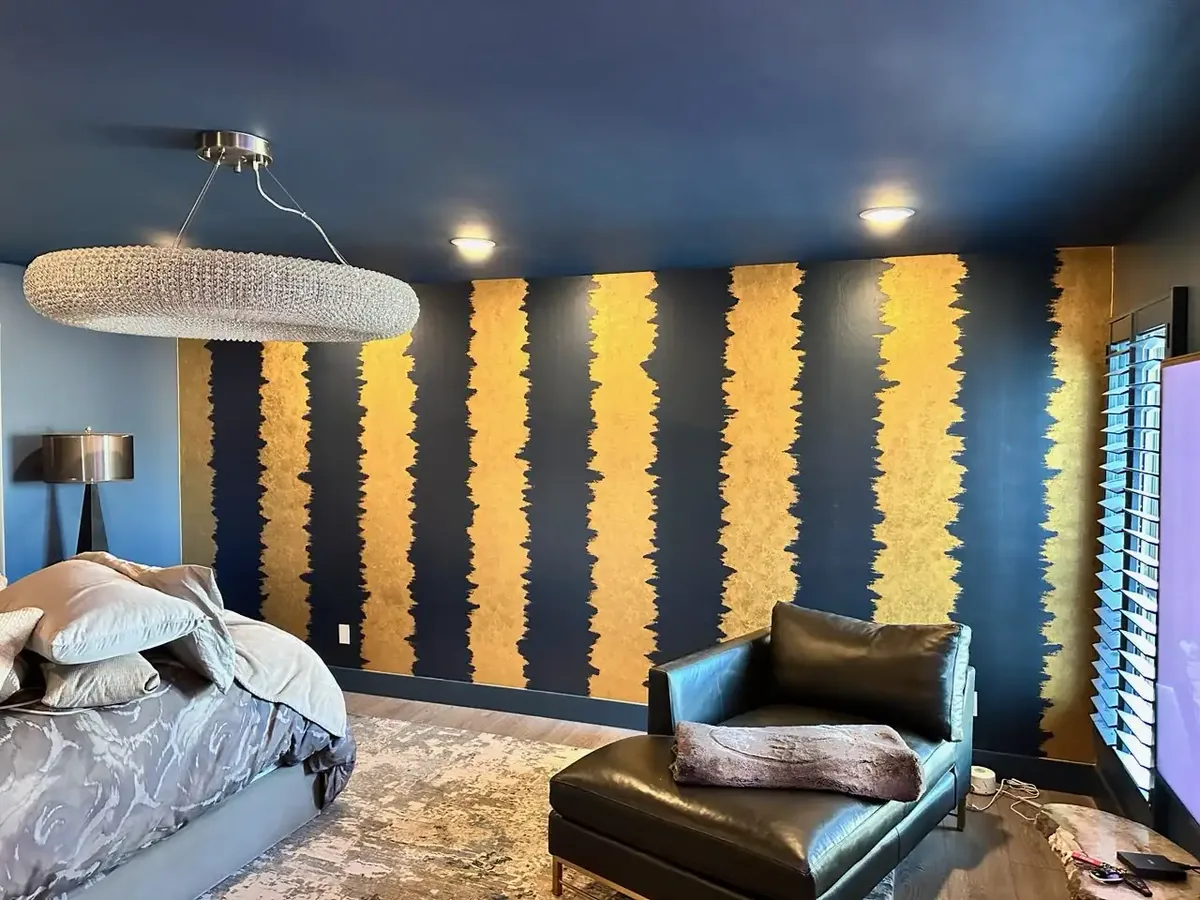
Traditional or peel-and-stick?
Traditional wallpaper is pasted — either the wall is pasted and the dry paper is hung into it, or the paper is pasted and booked before hanging. It is the more forgiving method for pattern matching, it allows the paper to be slid into position, and it generally gives the tightest, flattest finish on a prepared wall.
Peel-and-stick wallpaper carries its own adhesive. It is genuinely removable, which makes it useful for rentals, nurseries and rooms that may change. It is also less tolerant of texture and dust: the wall must be smooth, clean and fully cured, and the paper cannot be repositioned indefinitely without losing grip.
The honest answer is that the right choice depends on the wall and the length of time you want the paper to stay. A rental kitchen and a permanent dining room are different problems.
Why the wall matters more than the paper
Wallpaper is thin. It will follow the surface underneath, which means every ridge, patch, nail pop and drift of old adhesive becomes part of the finished wall. Preparation is not a formality before the decorative part; it is the decorative part.
A proper sequence looks like this: remove what is loose, wash off old paste, fill and sand repairs, spot-prime the patches, then prime and size the whole wall. New drywall is primed to control absorption. Old plaster is checked for hollow areas. Bathrooms and kitchens get a preparation routine that accounts for moisture and ventilation.
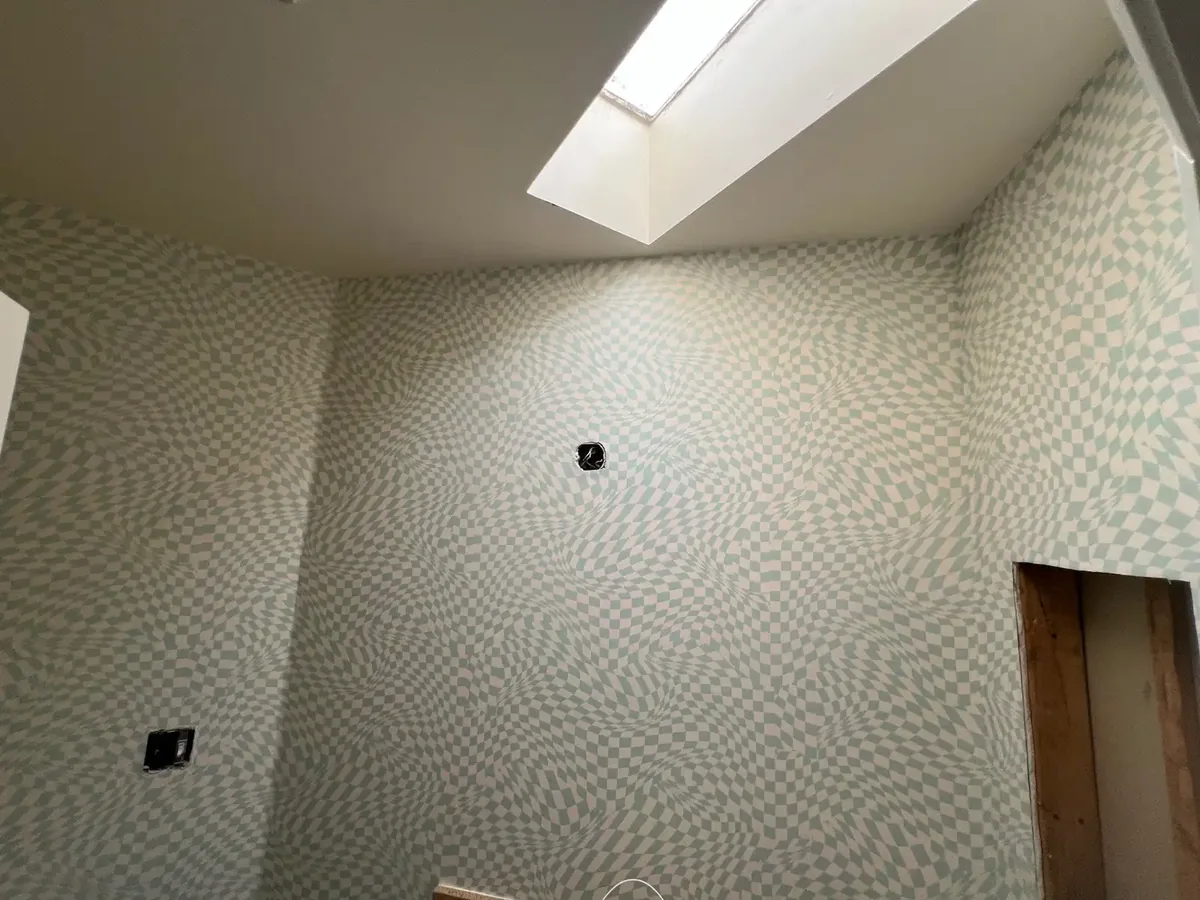
Pattern repeat, matching and layout
Every patterned wallpaper has a repeat — the vertical distance before the design starts again — and most have a match type: straight across, offset (half-drop) or random. The repeat determines how much paper is wasted at each drop and therefore how many rolls the room needs. A large repeat on a short wall can waste more paper than the wall area suggests.
Layout matters as much as quantity. The first drop sets the rhythm for the room, so we plan it from the most visible corner or the centre of the dominant wall, then work outward. On a chimney breast, a mural or a strongly symmetrical pattern, centring the design is usually worth the extra cutting.
Corners are never perfectly square. We do not wrap paper around an internal corner; we cut, overlap and re-plumb the next drop so the pattern continues without a visible twist.
Murals, grasscloth and specialty wallcoverings
Murals arrive as a set of numbered panels and need a layout planned before any paste is mixed. The centre of the image should sit where the room wants it, not where the roll happens to start.
Grasscloth and other natural fibers have visible seams and colour variation by nature. The seams are part of the material, and the variation is the reason to choose it. Vinyl and contract wallcoverings are more uniform but less forgiving at edges, and they need a wall that is flat and a trim line that is genuinely straight.
Choosing paper for the room
Start with how the room is used, then how it is lit. A low-traffic dining room can carry a delicate paper that a hallway could not. A bathroom needs a product rated for humidity and a wall that will stay dry. A kitchen needs a washable surface near the work zone.
Then consider scale. A large pattern needs a wall with enough uninterrupted space to show it; a small pattern can add detail to a narrow room but may look busy across a very large wall. Colour is the last decision, not the first — the same paper reads differently in morning and evening light.
What installation day looks like
We protect floors and furniture, set up a cutting area and work room by room. Paste is mixed fresh, drops are cut with a trim allowance, and the pattern is checked against the previous length before the paper goes on the wall. Seams are rolled, edges trimmed and the room cleaned as we go.
Most rooms are usable the same evening, once the paste has had time to grab. We will tell you when furniture can go back and when the room can be wiped down.
Living with wallpaper
Dust with a dry, soft brush or a vacuum brush attachment. Avoid soaking seams. In a bathroom, run the fan and keep the room ventilated. Small lifts at a seam can often be repaired before they spread; a torn corner is easier to fix than a torn drop.
Keep a spare roll if you can. Dye lots change, and a repair five years later is much easier with paper from the same batch.
Start here
Tell us about the room.
A name, a number and the city is enough to start. We will call you back during business hours to talk through the space, the walls and the next step.