Our approach
How a wallpaper project runs
From the first call to the final walkthrough — what happens, in what order, and how little you need to prepare before we speak.
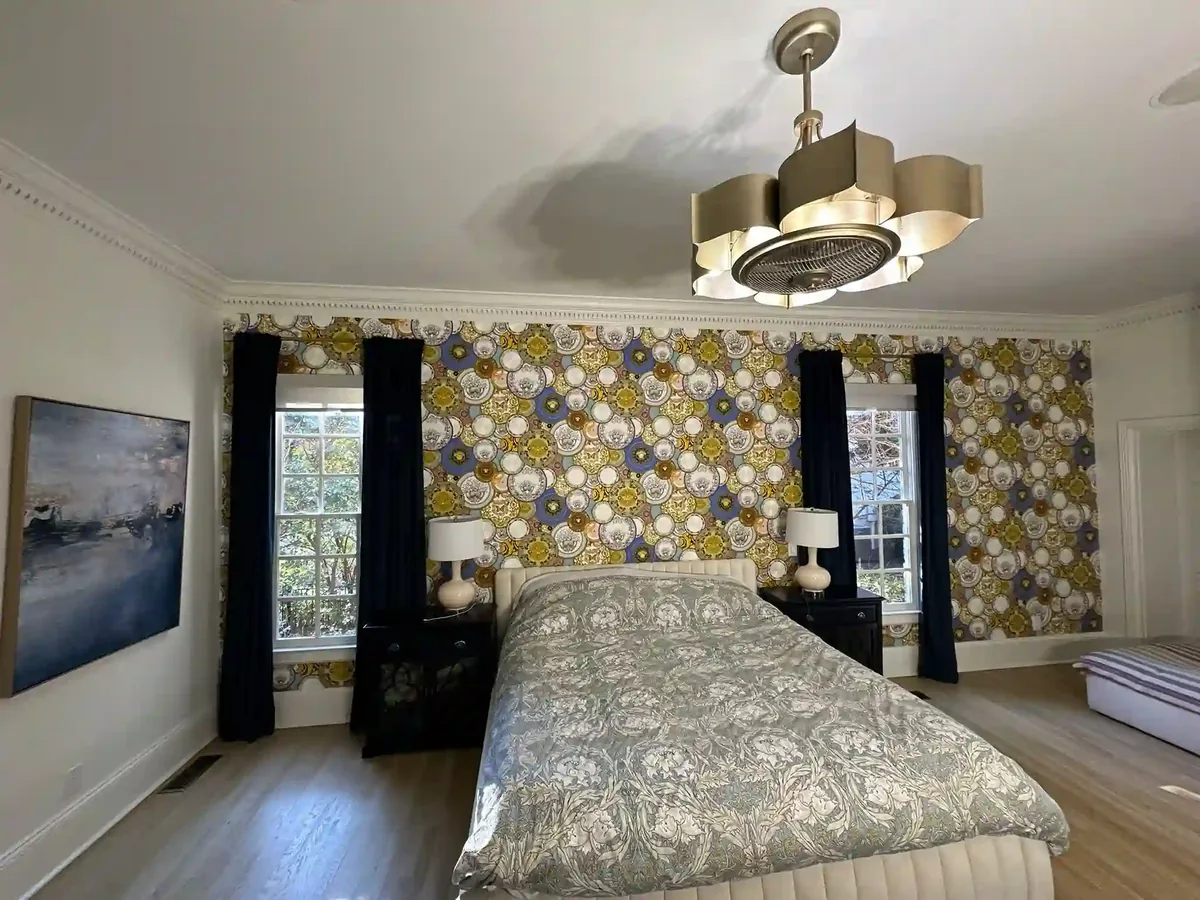
The first conversation
Most projects begin with a phone call and a sentence about a room. You do not need measurements, a sample or a finished idea. Tell us what the space is used for, what is on the walls now and what you would like it to feel like. We will ask about the age of the wall, any damp or cracking, the trim, the light and whether the room is being used while we work.
If you already have a wallpaper in mind, bring the name or a photograph. If you have none, that is a normal starting point — the room usually narrows the field quickly.
The visit and the measurement
On-site consultation and measurements are available. We measure the wall area rather than the floor plan, check the height at several points, note outlets, switches, radiators and trim, and look at how the light falls across the wall. Pattern repeat and roll width decide how much paper the room actually needs — a number that is easy to underestimate from a photograph.
We also look at what is underneath. Loose plaster, old adhesive, glossy paint and previous patches all change the preparation plan.
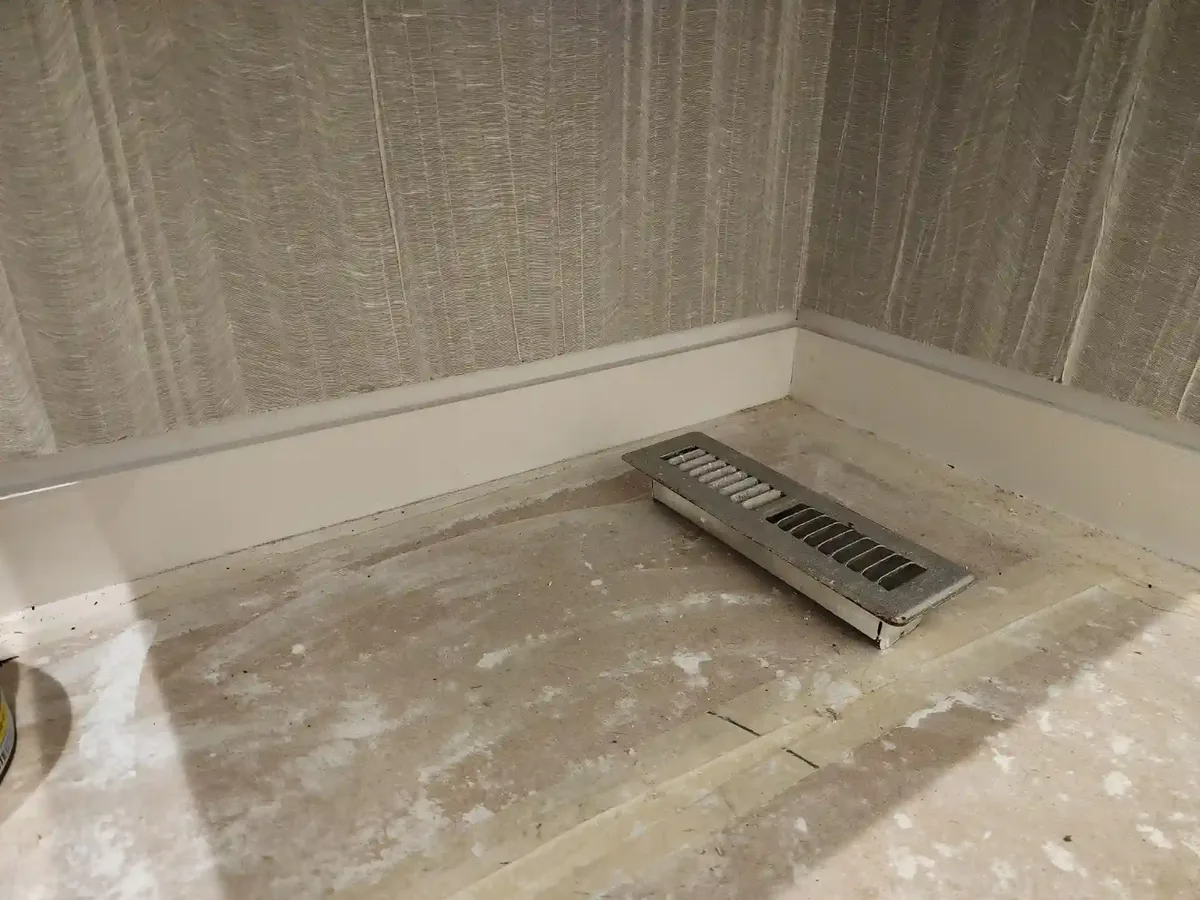
Preparation
Floors and furniture are protected, and the room is cleared as far as possible. Old paper is removed, adhesive is washed off, holes and cracks are filled, and the surface is sanded flat. Repairs are spot-primed, then the whole wall is primed and sized so the paper has an even surface to bond to and can be slid into position while it is wet.
This is the slowest part of the job and the one that shows least in photographs. It is also the part that decides whether seams stay tight a year later.
Installation day
Drops are cut to height with a trim allowance, the pattern is matched, and each length is pasted, booked and hung. Seams are rolled with consistent pressure, edges are trimmed at the ceiling, corners and trim, and outlets and switches are refitted. We work room by room and keep the rest of the house as clean as the site allows.
The walkthrough
Before we pack up, we walk the room with you in daylight and, where possible, under the room's own evening light. We point out seams, corners and any natural variation in the material, and leave you with simple care notes. If something needs attention, it is easier to address it then.
What helps on the day
- Clear access to the walls and a space for furniture that has been moved.
- A power outlet and reasonable working light.
- Any building access instructions, parking notes or lift bookings.
- A phone number where we can reach you during the day.
Start here
Tell us about the room.
A name, a number and the city is enough to start. We will call you back during business hours to talk through the space, the walls and the next step.